The issue of climate change has become - as we know - to one of the dominant themes of our time, and the way companies respond to it may have major implications for their future success. Therefore, my dissertation completed last year at Johannes Kepler University Linz had - among others - a distinct focus... Continue Reading →
Blog / My views
Currently it’s raining whitepapers on regulation of hydrogen and power-to-gas…
While ACER and CEER have published their whitepaper on regulation of hydrogen networks just a view days ago, the series has just been complemented with the newly published whitepaper Regulatory Treatment of Power-to-Gas. With the aim is to deepen understanding on the regulatory aspects of Green Deal issues and to assist the European Commission in... Continue Reading →
Some thoughts on the importance of sector coupling electricity / gas
Especially in an energy system increasingly dominated by volatile RES generation, the seasonal (!) shifting of structural (!) summer surpluses into the winter period is a key challenge. This is increasingly common sense. I believe the solution to this challenge comprises variety of measures: due to good reason reference is made to the storage potential... Continue Reading →
Aligning energy taxes and levies as prerequisite for energy system integration
A level playing field between different energy carriers and sectors is key to energy system integration. It is a prerequisite that energy can flow through the 'whole system' (power-gas-heat-transport-etc.) in an efficient way; i.e. based on market signals and without undue barriers or disturbance. This is the noble objective. The 'reality check' of energy taxes... Continue Reading →
German national regulatory framework for hydrogen is taking shape!
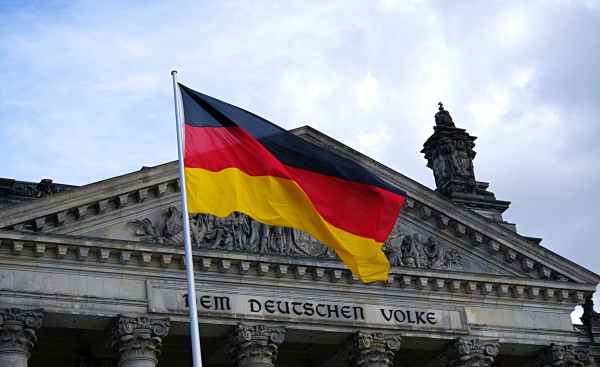
While many member states have prepared and published hydrogen or are in the process of doing so, Germany has developed to the frontrunner of this goal. There is already a concrete legislative proposal for a regulatory framework under discussion. Overall objective: Creation of a framework for a quick and legally secure, step-by-step realization of a... Continue Reading →
US carbon-free electricity plan
USA rejoining the Paris Agreement is great. However, this needs to be underpinned with significant action. Therefore the Biden Administration is, among other objectives, determined to make the U.S. power supply carbon neutral by 2035. Current situation: ⁓40% of US power supply is carbon neutral; made up of pretty similar shares of renewables and nuclear... Continue Reading →
How much green hydrogen will be needed in the EU in the future?
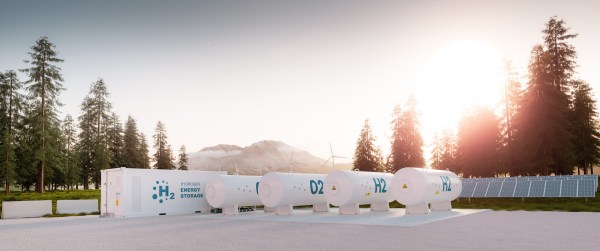
Replacing currently 340 TWh/y grey hydrogen in the EU with renewable or at least truly climate neutral hydrogen is the first major milestone on the journey. But this is just the start! According to a JRC study that investigated different EU deep decarbonization scenarios towards a a climate-neutral EU energy system 2050, there is a... Continue Reading →
The sheer endless discussion of the EU sustainable finance taxonomy
The EC is apparently snowed under with responses to published draft implementing rules for the EU sustainable finance taxonomy. Most critical points according to EURACTIV:- role of natural gas as “transition” fuel and possibility of using hydrogen from various energy sources (the in these days frequently observed division of general approaches in climate/energy policy )- more... Continue Reading →
A stocktaking of grey hydrogen in the EU
The first major milestone on the way towards establishing hydrogen as cornerstone of a climate-neutral society will be the substitution of grey hydrogen, which is fossil-fuel based and curently used in industrial processes, with renewable or at least truly climate neutral hydrogen. The current EU hydrogen consumption amounts to close to 10 mega tons or, in energy... Continue Reading →
Some insights into the Austrian heating sector
Currently, with the winter living up to its name and the temperature dropping below zero, it's time to take a closer look at the heating sector in Austria - heating and cooling of buildings represents roughly a quarter of the total final energy consumption in Austria (EU average: 40%) - total GHG emissions of buildings amount to ~8 Mio.... Continue Reading →